



How to Become a Surrogate in Maryland
Choosing to become a Surrogate in Maryland is a life-changing decision that allows you to help another family grow while also receiving meaningful compensation and support. Maryland is generally considered a workable state for gestational surrogacy because the process is supported through contract law, parentage procedures, and established legal practice that help create structure for the journey.
At Golden Surrogacy, we provide the guidance, careful matching, and transparent compensation you need to move through the process with confidence. Our team supports you from your first conversation through screening, matching, legal, transfer, pregnancy, and delivery, so you always know what comes next.
If you are ready to see whether you qualify and what your path could look like, keep reading. This page will walk you through the key steps, requirements, legal basics, compensation, and timeline for becoming a Surrogate in Maryland.
Ready to become a Surrogate in Maryland with clear guidance and transparent pay?

- How to Become a Surrogate in Maryland
- Quick Answer
- Why Women Consider It
- Who Can Become a Surrogate in Maryland?
- How the Process Works in Maryland
- Is Surrogacy Legal in Maryland?
- How Much Do Surrogates Make in Maryland?
- What the Timeline Looks Like
- What Makes Golden Different
- Cities and Communities We Serve in Maryland
- Learn More
- FAQ
- Apply Now
Quick Answer: Can You Become a Surrogate in Maryland?
Yes, many women can become a Surrogate in Maryland if they meet strong screening standards and are comfortable with the medical, legal, and emotional commitment involved.
- Maryland legal framework: Gestational surrogacy in Maryland is generally supported through contract law, parentage procedures, and established legal practice rather than one dedicated statewide surrogacy statute.
- Golden’s standards: Golden’s requirements are agency screening criteria. They are not the same thing as Maryland law.
- Minimum pay: First-time Surrogates with Golden receive a $70,000 minimum total, made up of $50,000 base compensation and $20,000 in standard Golden benefits.
- Timeline: The overall journey usually unfolds over many months, with timing affected by records, matching, clinic scheduling, contracts, transfer readiness, and legal coordination.
- First step: Submit an application, speak with the team, and begin pre-screening to see whether the journey is a good fit.
This page is a practical overview for women exploring surrogacy. Legal strategy should always be confirmed with a qualified Maryland reproductive attorney.
Why Women Consider Becoming a Surrogate in Maryland
Most women do not explore surrogacy for just one reason. The decision is often a blend of heart, purpose, and practical support.
Helping build a family
Surrogacy gives another family a chance to welcome a child they may not otherwise be able to carry on their own. For many women, that impact is the most meaningful part of the journey.
Doing something deeply meaningful
Women who enjoyed pregnancy and want to do something extraordinary often see surrogacy as a purpose-driven path. It is generous work, and it deserves serious support.
Receiving meaningful compensation
Compensation matters. A well-structured journey can support financial goals while also respecting the time, effort, and commitment the Surrogate is making.
Feeling protected and guided
The right agency should make the process clearer, not more confusing. That includes straightforward communication, careful screening, solid contracts, and support that feels human.
If you are still weighing questions, concerns, or outdated assumptions, read our guide to common Maryland surrogacy myths for Surrogates for added clarity.
Who Can Become a Surrogate in Maryland?
There are two separate questions here, and it is important not to blend them together. First, does a woman meet Golden’s screening criteria? Second, what does Maryland’s legal framework generally allow and require? Keeping those categories distinct makes the process much easier to understand.
A. Golden’s screening criteria
Golden’s standards help determine whether an applicant is likely to be a safe, strong candidate for the journey. For a deeper overview, see our full guide to Maryland Surrogate requirements.If you want a broader look at the personal, practical, and emotional traits agencies value beyond the checklist, read What Makes a Good Surrogate? Qualities Agencies Look For.
- Age 23–37
- BMI 30 or under prior to clearance
- Must have given birth
- Uncomplicated pregnancies
- No more than 3 previous deliveries
- No more than 1 previous C-section
- Excellent overall health
- Stable and supportive family
- Stable living environment
- Non-smoker
- Non-drug user
- No criminal history
- Financially secure
- Reliable transportation
- No tattoos or piercings in the last 12 months
B. Maryland legal framework at a high level
Maryland law does not set Golden’s medical screening standards. Instead, it shapes how gestational surrogacy arrangements are typically structured and how parentage is commonly handled through court procedures.
- Maryland does not rely on one dedicated comprehensive surrogacy statute in the same way some states do.
- Gestational surrogacy is generally supported through contract law and established legal practice.
- Written agreements matter, and each party should have independent legal counsel.
- Parentage is commonly established through Maryland court procedures when the journey is properly structured.
- Legal planning should clearly address compensation, parentage, and birth-record strategy before embryo transfer.
For a fuller legal overview, visit our guide to Maryland surrogacy laws for Surrogates.
How the Process Works in Maryland
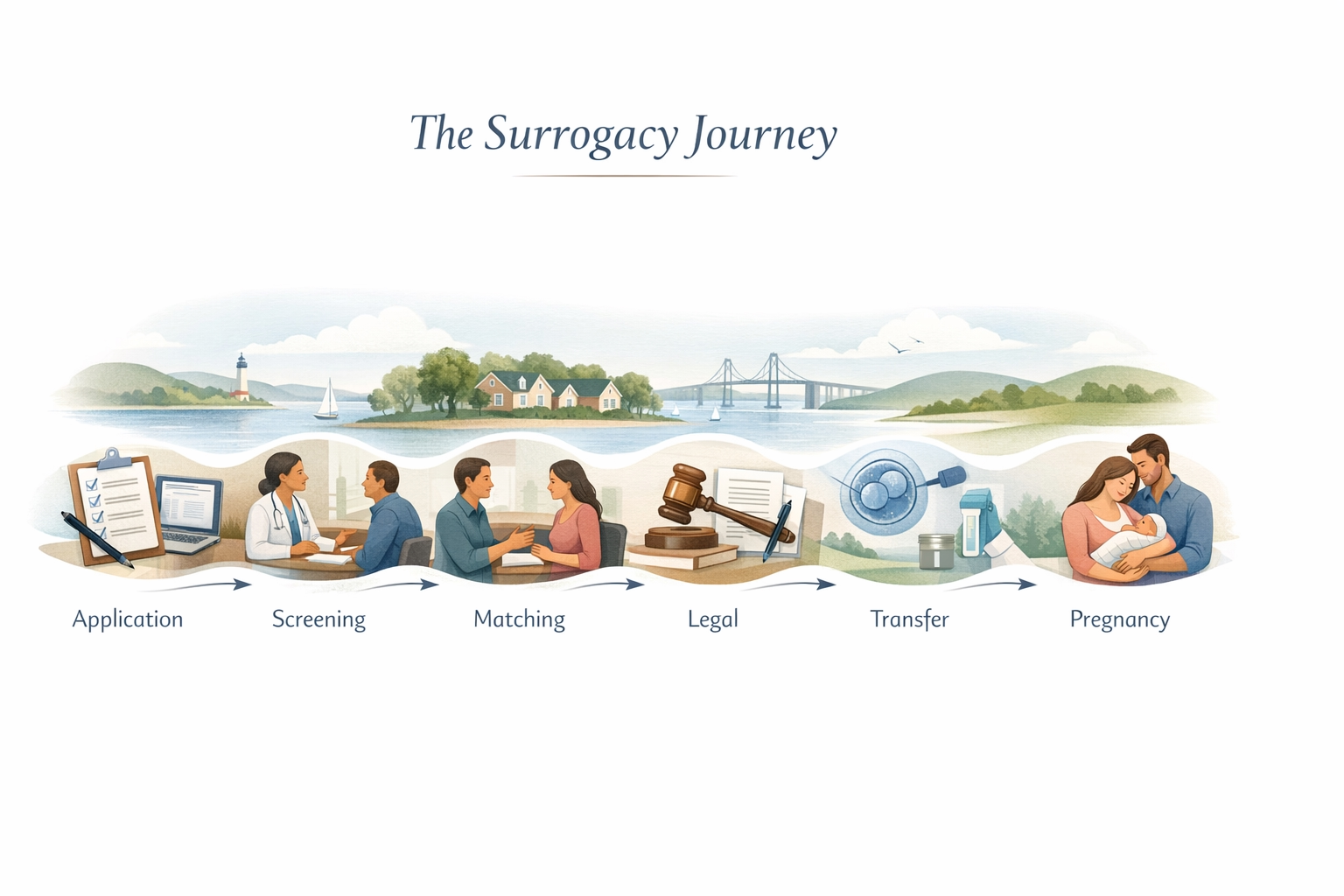
The path to becoming a Surrogate in Maryland should feel organized, not overwhelming. Below is the big-picture flow, so you can understand what happens at each stage and why each step matters.
- Apply — You begin by submitting your information so the team can understand your background, pregnancy history, and overall fit.
- Initial conversation and intake — Golden gets to know you, answers questions, and helps you understand the commitment ahead.
- Pre-screening and records review — Your pregnancy records and health history are reviewed before deeper time and energy are invested.
- Matching — If approved, Golden works to match you with Intended Parents whose journey aligns well with your values and expectations.
- Clinic screening — The fertility clinic completes its own medical review and testing before treatment moves forward. Learn more about Maryland Surrogate clinic screening.
- Legal contracts — Each party works with independent counsel so the agreement is clear before medications begin.
- Medication and embryo transfer — Once medical clearance and legal work are complete, the clinic guides the medication cycle and transfer process. Many women also review Maryland surrogacy insurance for Surrogates.
- Pregnancy and delivery — After a successful transfer, Golden remains involved through pregnancy support, coordination, and delivery planning.
Is Surrogacy Legal in Maryland?
In practical terms, gestational surrogacy is generally workable in Maryland. The key point is that Maryland does not rely on one dedicated comprehensive surrogacy statute in the same way some states do. Instead, surrogacy arrangements are commonly supported through contract law, parentage procedures, and established legal practice.
That means properly drafted surrogacy agreements matter. Independent legal counsel matters. Parentage planning matters. And because court handling can vary depending on the facts of the case, experienced legal guidance is an important part of the process.
Maryland is generally considered friendly to gestational surrogacy when the journey is structured correctly with clear contracts and court planning. The exact legal strategy and parentage process should be tailored to the case by a qualified Maryland reproductive attorney.
For a more detailed article written specifically for women considering this journey, visit our guide to Maryland surrogacy laws for Surrogates.
How Much Do Surrogates Make in Maryland?
Golden’s verified minimum for a first-time Surrogate is $70,000 total. That number is presented clearly so women can understand the baseline without vague “up to” language.
In addition to compensation, Intended Parents also pay qualifying journey-related expenses as outlined in the agreement. That can include legal fees, medical bills, mileage, childcare for qualifying appointments, lost wages where applicable, and approved travel-related costs.
Golden also places strong emphasis on compensation transparency. Compensation is held in a safe and secure third-party escrow structure, and Golden does not issue a 1099 to Surrogates. Individual tax questions should still be reviewed with a qualified tax professional.
For a closer breakdown, read our guide to Maryland Surrogate compensation and pay.
If you are comparing agency pay packages, read Surrogate Compensation Red Flags: How to Compare Pay Packages so you can better understand guaranteed pay, benefits, reimbursements, and advertised “up to” compensation claims.

What the Maryland Surrogacy Timeline Looks Like
The full surrogacy journey is not something that starts and finishes in a few weeks. From application through delivery, the process usually spans many months and can move faster or slower depending on how quickly records are collected, how long matching takes, when the clinic schedules screening, how legal contracts progress, and when transfer timing lines up.
That is normal. Good surrogacy work is coordinated carefully, and timing often depends on several moving parts coming together in the right order.
If you want a more detailed stage-by-stage view, read our full guide to the Maryland surrogacy timeline for Surrogates.
What Makes Golden Surrogacy Different for Maryland Surrogates
Golden’s value is not about hype. It is about structure, clarity, and support that helps the journey feel more secure from the beginning.
- Transparent compensation with a $70,000 minimum total for first-time Surrogates
- Safe and secure third-party escrow for compensation handling
- Independent legal representation for each party
- No double-embryo transfers
- 10+ years in business with experienced team support
- $5,000 referral fee for qualifying referrals
If you are still comparing agencies, read our guide to how to choose the best surrogacy agency for Surrogates so you know what to look for in support, compensation transparency, legal protections, and overall fit.
Cities and Communities We Serve in Maryland
Learn More About Becoming a Surrogate in Maryland
This page is meant to be the main overview. These Maryland-specific articles can help you go deeper into the parts of the journey that matter most to you.
Maryland Surrogate FAQs
Is surrogacy legal in Maryland?
Yes. Gestational surrogacy is generally workable in Maryland through contract law, parentage procedures, and established legal practice. Legal details should still be reviewed with a qualified Maryland reproductive attorney.
How much do Surrogates make in Maryland?
With Golden, first-time Surrogates receive a $70,000 minimum total, which includes $50,000 in base compensation and $20,000 in standard Golden benefits. Intended Parents also pay qualifying journey-related expenses as outlined in the agreement.
What are the requirements to become a Surrogate in Maryland?
Golden’s criteria include being 23–37, having given birth, having uncomplicated pregnancies, meeting BMI and health requirements, being a non-smoker and non-drug user, having a stable and supportive home life, and meeting additional screening standards.
How long does it take to become a Surrogate in Maryland?
The complete journey usually takes many months rather than a few weeks. Timing depends on records collection, matching, clinic screening, contracts, transfer scheduling, pregnancy progression, and legal coordination.
Can I become a Surrogate in Maryland if I had a C-section?
Possibly. Golden allows no more than one previous C-section prior to clearance. Final approval still depends on your full obstetric history and clinic review.
Can I become a Surrogate if my tubes are tied?
Often, yes. Gestational surrogacy uses IVF and embryo transfer, so a prior tubal ligation does not automatically disqualify someone. Your full medical history and clinic approval still matter.
Do I need to live near Baltimore or another major city to work with Golden Surrogacy?
No. Golden supports Surrogates throughout Maryland, including women in Baltimore, Columbia, Germantown, Silver Spring, Annapolis, and many other communities across the state. You do not need to live in one specific city to apply. If you are wondering whether the agency itself needs to be close to you, read our guide on why a surrogacy agency does not need to be local.
Take the First Step Toward Becoming a Surrogate in Maryland
If this path feels meaningful to you, the next step is simple. Start with an application and a real conversation. Golden will help you understand whether you are a fit, what the process may look like in your situation, and what comes next.
You do not need to have every answer before you begin. You just need a trusted place to start.

Surrogate Compensation
This is the standard compensation structure for Golden Surrogates in Maryland. We do recognize that compensation is a personal choice. Therefore, our Surrogates may negotiate and set their own amounts upon request.
Base
$50,000
- 1st time Surrogates
- Regardless of State
- Regardless of Insurance
- Regardless of Employment
- No 1099 Issued!
- Experienced Surrogates +$5k
Standard Golden Benefits
$20,000
- $500 Matching Bonus
- $500/mo (x 14mo)
- $1,500 Clothing Allowance
- $1,500 Med Start Fee
- $1,500 Embryo Transfer Fee
- $8,000 Milestone Bonus
(legal completion & 1st transfer)
Minimum Total
$70,000
- Base Comp + Standard Benefits
In addition to the base compensation and standard golden benefits, Intended Parents pay the Surrogate’s legal fees, medical bills, mileage to and from doctors/lab appointments, childcare for doctor/ lab appointments, lost wages, airfare, hotel accommodations, and a meal allowance for out of town travel for the Surrogate and their companion and other expenses as detailed in the gestational surrogacy agreement.