



California Surrogacy Insurance: What Surrogates Should Know
September 16, 2025 by Frank Golden

If you’re considering becoming a Surrogate in California, insurance is probably one of your biggest questions. And that’s completely understandable! You want to know that you’ll be protected throughout every step of your surrogacy journey.
Here’s the good news: California surrogacy insurance is designed to keep you safe, healthy, and financially secure. The right coverage ensures you won’t face unexpected medical bills or out-of-pocket costs during pregnancy.
In this guide, we’ll walk you through everything you need to know about surrogacy insurance in California. You’ll learn what’s typically covered, how insurance is reviewed before you even start, and how ethical agencies protect Surrogates every step of the way!
Table of Contents
- Why Insurance Matters in California Surrogacy
- What Maternity Insurance Typically Covers for Surrogates
- Common Insurance Gaps and Surrogacy Exclusions
- How Surrogacy Insurance Is Reviewed and Secured
- How Insurance Protects California Surrogates Financially
- Insurance Red Flags Surrogates Should Watch For
- How Golden Surrogacy Helps Protect California Surrogates
- Frequently Asked Questions About California Surrogacy Insurance
- What Comes After Insurance Review?
Why Insurance Matters in California Surrogacy
Pregnancy comes with medical appointments, lab work, hospital stays, and sometimes unexpected situations. Without proper insurance coverage, these costs could add up quickly.
That’s why ethical surrogacy always prioritizes insurance review before any medical steps begin. It’s not about creating barriers. It’s about making sure you’re fully protected before you commit to this incredible journey!
California has some of the most supportive surrogacy laws in the country. But even in a surrogate-friendly state, insurance matters. Medical costs for pregnancy and delivery can reach tens of thousands of dollars. No Surrogate should ever worry about being stuck with those bills.
Insurance review happens early in the process for a reason. It gives everyone peace of mind. You’ll know exactly what’s covered before an embryo transfer ever takes place.
According to the American Society for Reproductive Medicine (ASRM), comprehensive insurance coverage is a key component of ethical assisted reproduction. It protects everyone involved and ensures the process moves forward smoothly.

What Maternity Insurance Typically Covers for Surrogates
Understanding what insurance covers helps you feel confident about your protection. Here’s a breakdown of what most surrogacy-friendly policies include!
Prenatal Care
Prenatal care includes all your regular checkups throughout pregnancy. This means doctor visits, ultrasounds, blood tests, and any monitoring appointments.
Good coverage ensures you can attend every appointment without worrying about costs. Prenatal care is essential for a healthy pregnancy, and you deserve full access to it!
Labor and Delivery
This is the big one! Labor and delivery coverage includes your hospital stay, delivery room costs, anesthesia, and any necessary medical interventions.
Whether you have a vaginal delivery or a cesarean section, proper insurance covers the expenses. You should never have to think about bills during such an important moment.
Postpartum Care
Your coverage doesn’t end at delivery. Postpartum care includes follow-up appointments, recovery support, and any medical needs after you give birth.
Medical coverage typically continues for at least three months following an uncomplicated pregnancy. For cesarean deliveries, coverage often extends up to six months. This gives you time to heal completely!
It’s important to note that coverage varies based on individual policies and circumstances. That’s why professional insurance review is so important before you begin.
Common Insurance Gaps and Surrogacy Exclusions
Here’s something many women don’t realize: most standard health insurance policies don’t cover surrogacy pregnancies.
Why? Most plans define “maternity coverage” as applying only when the policyholder is pregnant with their own biological child. This means surrogacy is often explicitly excluded from coverage.
This isn’t a reflection of anything negative about surrogacy. It’s simply how most insurance policies are written. The good news is that specialized surrogacy insurance exists specifically to fill these gaps!
Common exclusions you might encounter include:
- Explicit surrogacy exclusions in policy language
- Limited coverage for assisted reproductive technology
- Caps on certain pregnancy-related services
- Geographic restrictions on covered providers
Don’t let this worry you! These exclusions are identified early through professional insurance review. If your current policy doesn’t cover surrogacy, alternative coverage is secured before anything moves forward.
Early review prevents problems later. You’ll have complete clarity about your coverage before any embryo transfer takes place.
How Surrogacy Insurance Is Reviewed and Secured
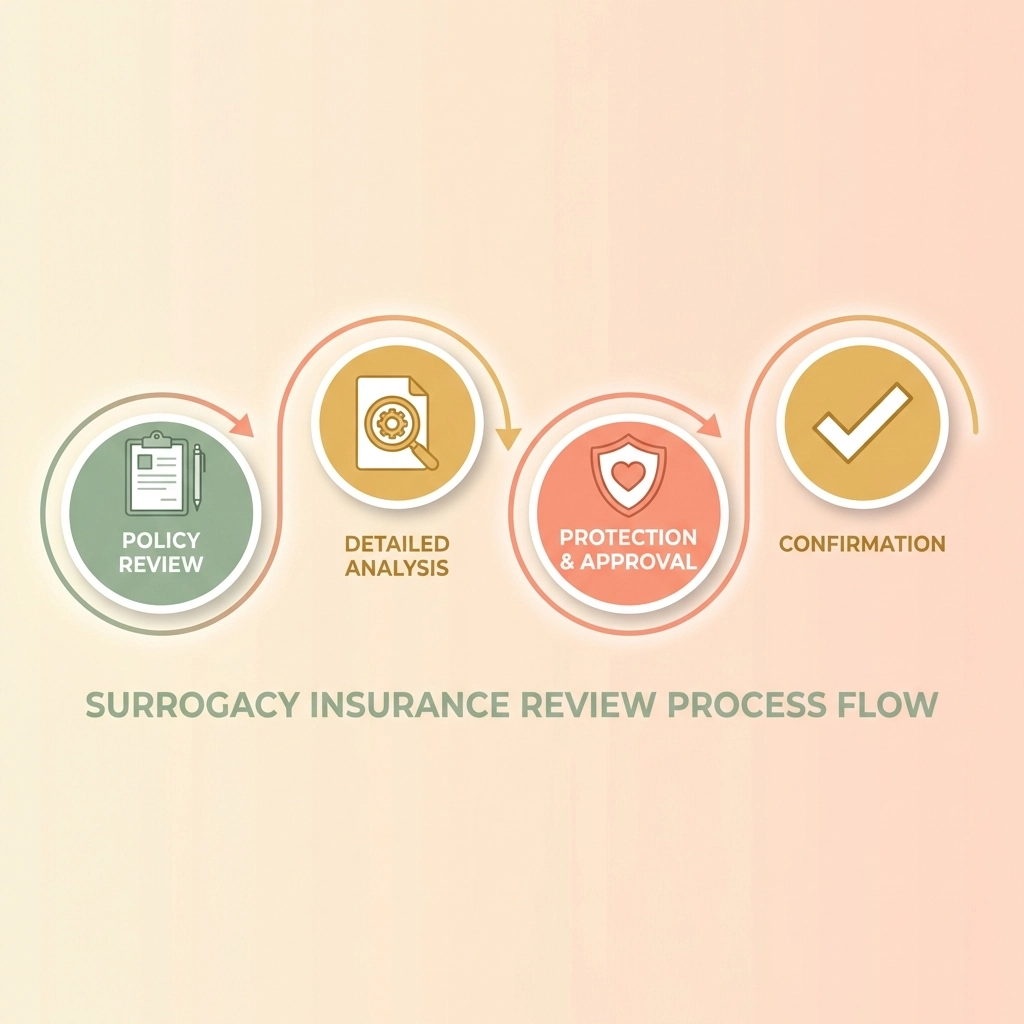
The insurance review process is thorough but straightforward. Here’s how it typically works!
First, if you already have health insurance, professionals will review your existing policy. They’ll check the fine print to determine whether your plan covers surrogacy-related maternity care.
If your current policy works, you may continue with it. You’d typically continue paying your own premiums as usual.
However, if your policy excludes surrogacy or you don’t currently have health insurance, a new plan will be put in place. This happens before any embryo transfer occurs.
The California surrogacy timeline includes insurance review as an early step. This ensures everything is confirmed before you proceed to medical clearance and legal contracts.
When a new policy is required, Intended Parents cover all insurance premiums, co-pays, deductibles, and co-insurance related to the surrogacy. You won’t be responsible for these costs!
Specialized surrogacy insurance plans are designed specifically for gestational carriers. They provide comprehensive coverage without the exclusions found in standard policies.
How Insurance Protects California Surrogates Financially
Think of insurance as your financial safety net throughout the surrogacy journey. It’s there to protect you from unexpected costs and ensure you can focus on your health.
Here’s what proper insurance protection means for you:
No surprise medical bills. All pregnancy-related expenses are covered, from your first monitoring appointment through delivery and recovery.
Coverage for complications. If bed rest or extended recovery is needed, you’re protected. Short-term disability coverage can also help replace lost income during these times.
Peace of mind. You can attend every appointment, follow every medical recommendation, and focus on a healthy pregnancy without financial stress.
Insurance isn’t just a box to check. It’s a fundamental part of ethical surrogacy. The CDC emphasizes the importance of comprehensive prenatal care for healthy pregnancies. Proper insurance ensures you have full access to that care!
Beyond medical coverage, most surrogacy arrangements also include life insurance policies. These provide additional financial security for your family throughout the pregnancy.
Understanding your California Surrogate compensation package means understanding your insurance protections too. They work together to ensure you’re fully supported.
Insurance Red Flags Surrogates Should Watch For
Not every agency handles insurance the same way. Here are some warning signs that insurance isn’t being handled properly!
Vague answers about coverage. You deserve clear, specific information about what’s covered and what isn’t. If an agency can’t answer your insurance questions directly, that’s concerning.
Pressure to move forward without confirmation. Insurance should be reviewed and confirmed in writing before an embryo transfer. If anyone pushes you to proceed without this step, pause and ask questions.
No professional insurance review. Insurance policies are complex. A professional should review your coverage, not just a quick glance at your insurance card.
Lack of transparency. You should know exactly who is paying for what. Premium costs, deductibles, and coverage details should all be explained clearly.
These red flags matter because cutting corners on insurance puts you at risk. A few extra days of review is always worth it for your protection!
When reviewing California Surrogate requirements, remember that insurance review is a standard part of the qualification process. It’s there to protect you.
How Golden Surrogacy Helps Protect California Surrogates
At Golden Surrogacy, Founder Frank Golden leads the team with one guiding principle: every Surrogate is treated like family. That includes making sure you’re fully protected through comprehensive insurance review!
Here’s how the dedicated Care Team supports you:
Transparent communication. Your Program Manager is available via phone, text, and email to answer any insurance questions. No question is too small!
Professional coordination. Golden Surrogacy works with insurance specialists who understand surrogacy-specific coverage. They review policies thoroughly and identify any gaps.
Education before commitment. You’ll understand your insurance coverage completely before moving forward. There are no surprises down the road.
Advocacy at every step. If issues arise, your Care Team advocates on your behalf. You’re never left to navigate insurance challenges alone.
Insurance review happens after pre-screening and before in-person screening. This ensures everything is confirmed while your timeline stays on track!
Frequently Asked Questions About California Surrogacy Insurance
Do Surrogates need their own insurance?
It depends on your current coverage! If your existing policy covers surrogacy maternity, you may use it. If not, a specialized policy will be secured for you before the embryo transfer.
What if my policy excludes surrogacy?
This is very common and nothing to worry about! If your policy has a surrogacy exclusion, a new policy will be put in place. Intended Parents cover the cost of this specialized coverage.
Who pays for surrogacy-related insurance?
When a new or supplemental policy is required, Intended Parents pay all premiums, deductibles, co-pays, and co-insurance. You should not have out-of-pocket costs for surrogacy-related medical care.
What happens if coverage changes during pregnancy?
Professional insurance coordination includes monitoring your coverage throughout pregnancy. If any changes occur, your Care Team works to ensure continuous protection.
Does insurance cover complications?
Yes! Comprehensive surrogacy insurance covers pregnancy complications, extended hospital stays, and necessary medical interventions. That’s why thorough coverage is so important.
What Comes After Insurance Review?
Once your insurance is confirmed, you’re ready to continue moving forward! The next steps typically include matching with Intended Parents and beginning the legal process.
Legal contracts begin only after medical clearance is complete. Your insurance coverage will be documented in your legal agreement, providing written confirmation of your protections.
During the second trimester, additional coordination begins. This includes birthrights documentation and hospital planning, ensuring everyone knows what to expect at delivery.
Ready to learn more about whether surrogacy might be right for you? The team at Golden Surrogacy is here to answer your questions and provide the information you need to make an informed decision.
Take your time. Get educated. And when you feel ready, explore your next steps with a team that puts Surrogates first!