



Colorado Surrogate Compensation: What Surrogates Can Expect
November 14, 2024 by Frank Golden

One of the very first questions women ask about surrogacy is “How much does it pay?”
That’s completely understandable! Colorado surrogate compensation is an important part of your decision. You’re giving an incredible gift, and you deserve to be supported fairly throughout the journey.
This guide breaks down everything you need to know about Surrogate pay in Colorado. We’ll cover base compensation, reimbursements, how payments work, and what protects your financial security from start to finish!
Whether you’re exploring surrogacy for the first time or considering a second journey, you’ll walk away with clear, honest answers.
Table of Contents
- How Surrogate Compensation Works in Colorado
- Average Colorado Surrogate Compensation Ranges
- What Is Included Beyond Base Compensation
- Why “High Pay” Headlines Can Be Misleading
- How Payments Are Protected Through Escrow
- How Colorado Law Supports Surrogate Compensation
- How Golden Surrogacy Structures Compensation Ethically
- Frequently Asked Questions About Colorado Surrogate Compensation
- Making an Informed Decision About Compensation

How Surrogate Compensation Works in Colorado
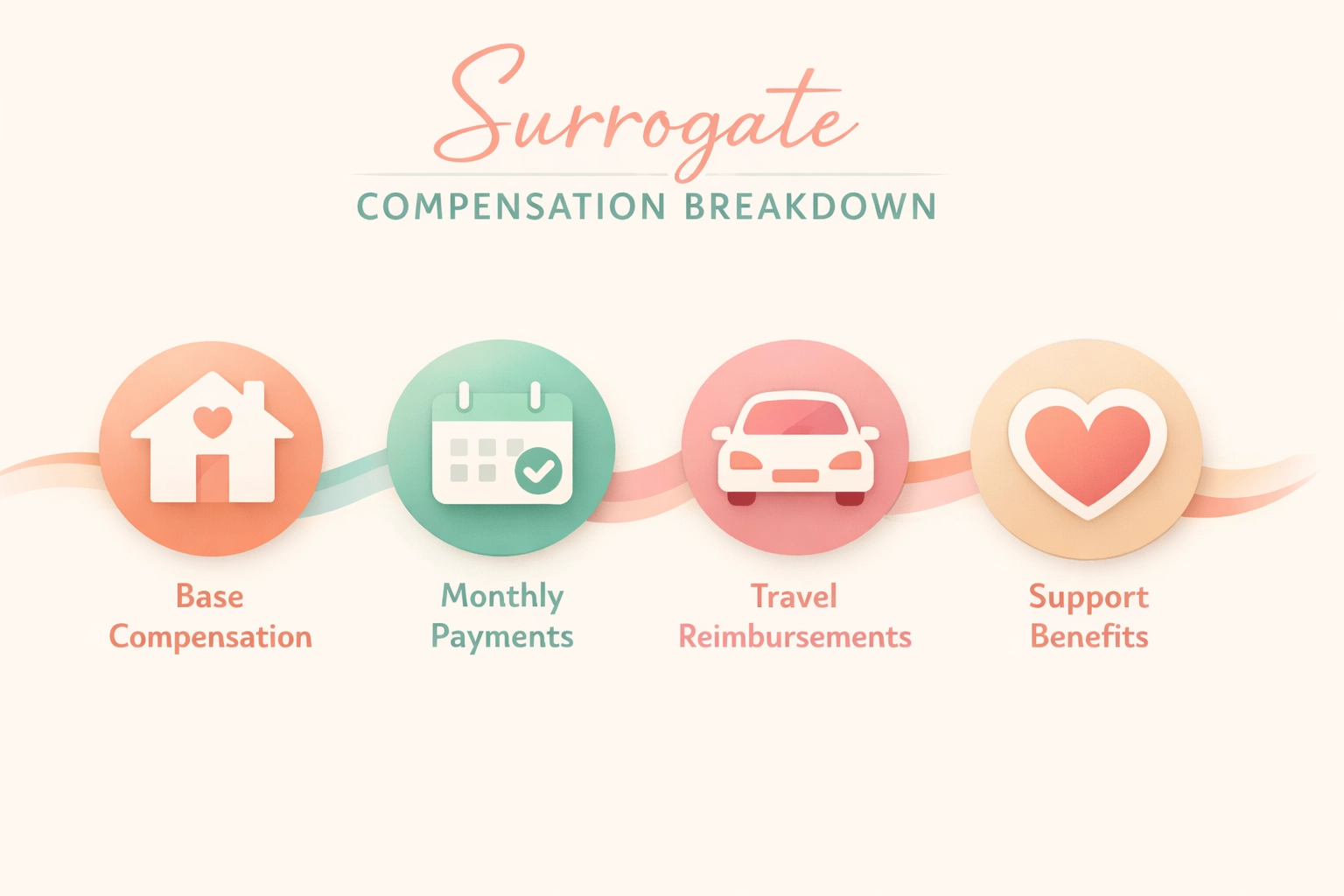
Surrogate compensation isn’t one lump sum payment. It’s a structured package designed to support you throughout your entire journey!
Base compensation is the amount you earn for carrying and delivering a healthy baby. This is the number most people think of when they hear “Surrogate pay.”
Reimbursements cover your actual expenses related to the pregnancy. Things like travel costs, maternity clothes, medical copays, and lost wages all fall into this category.
Here’s what makes surrogacy compensation different from a regular paycheck: it’s milestone-based!
You don’t wait until delivery to get paid. Payments begin once pregnancy is confirmed (usually after a heartbeat is detected). From there, you receive regular monthly payments throughout the pregnancy and into the postpartum period.
Everything is outlined in your legal contract before you ever begin medications. No surprises, no guessing games!
The contract specifies exactly when each payment is made, how much it is, and what triggers it. This protects both you and the Intended Parents.
All funds are held in a secure escrow account (more on that in a minute!). This means your money is already set aside and protected before you start the medical process.
Average Colorado Surrogate Compensation Ranges
So, what do Colorado Surrogates actually earn?
Total compensation packages typically range from $60,000 to $70,000 or more. The exact amount depends on several factors that we’ll break down below!
First-time Surrogates generally receive base compensation between $45,000 and $50,000. When you add reimbursements and benefits, the total package usually ranges from $60,000 to $70,000+.
Experienced Surrogates earn significantly more! If you’ve completed one successful surrogacy journey, your base compensation starts higher (often $55,000 to $60,000+). Total packages for second-time Surrogates can reach $75,000 or more.
Some agencies offer extra bonuses for repeat Surrogates. For example, you might receive an additional $5,000 bonus for returning!
What Influences Your Compensation?
Several factors affect where you fall in the compensation range:
Your surrogacy experience. First-time Surrogates earn less than experienced Surrogates. Each successful journey you complete increases your base pay!
Your medical history. Straightforward pregnancies and deliveries are valued. Complications or high-risk factors may affect eligibility or compensation structure.
Your location within Colorado. If you live far from the fertility clinic, you might receive additional travel reimbursements. Urban vs rural location can impact certain expenses.
Insurance considerations. Whether your current health insurance covers surrogacy affects the overall cost structure (though this doesn’t reduce your personal compensation!).
The specific agency you work with. Different agencies have different compensation philosophies and package structures.
It’s important to remember: compensation varies based on individual circumstances and contractual terms. Ethical agencies provide detailed breakdowns before you commit to anything!
What Is Included Beyond Base Compensation
Your base pay is just one piece of the compensation puzzle! Let’s dig into the extras, because this is where real-life support shows up in a big way!
A quick reminder: every number and trigger is spelled out in your contract before you ever start meds. You’ll know what’s covered, when it’s paid, and how to request it!
Monthly Allowances
You’ll usually get a monthly allowance starting after contract signing and continuing through pregnancy and into postpartum (often 6 to 8 weeks after delivery).
This is meant to cover the “ongoing stuff” that adds up fast during a surrogacy journey.
Think: extra gas, parking, co-pays, little comfort items, and the time you spend coordinating appointments and updates.
Maternity Clothing Allowance
Pregnancy changes your body fast!
Most contracts include a maternity clothing allowance (often $1,000 to $1,500) so you’re not stuck squeezing into old jeans or buying things you didn’t plan for.
This can cover basics, work outfits, bras, and comfortable shoes.
Travel and Lodging Reimbursements
Any travel required for the journey is reimbursed.
That includes clinic monitoring, embryo transfer trips, or specialist visits if your OB refers you out.
Reimbursements typically cover mileage, parking, tolls, rideshare, flights, hotels, and meals while traveling.
If a support person needs to come with you for a procedure (like transfer day), their travel costs are usually covered too, as long as it’s in the contract.
Lost Wages
If surrogacy makes you miss work, you shouldn’t lose money.
Lost wage reimbursement typically covers time missed for clinic appointments, transfer day, pregnancy complications, bed rest, and postpartum recovery if your doctor orders it.
It can also cover using up PTO or sick days, depending on how the contract is written.
You’ll usually provide employer documentation (hours missed and your pay rate), and then escrow releases payment.
Childcare Reimbursement
If you’ve got kids at home, appointments aren’t always simple.
Childcare reimbursement is commonly included for clinic days, long OB appointments, procedures, bed rest periods, and those first recovery days postpartum.
This can mean paying a babysitter, daycare drop-in fees, or after-school care so you can get to monitoring early in the morning.
Invasive Procedure Fees (More Detailed Examples)
This is one of the most misunderstood “beyond base” categories, so let’s make it super clear.
Invasive procedure fees are separate, add-on compensation that kicks in only if you actually undergo certain procedures during the pregnancy.
You don’t “plan” on these. You’re supported if they happen.
Here are common examples Surrogates ask about:
- Amniocentesis fee: If an amnio is medically recommended and you choose to proceed, many contracts include a set compensation amount for the procedure itself, plus reimbursement for mileage, parking, and any co-pays.
- CVS (chorionic villus sampling) fee: Similar concept. This may come up earlier than an amnio, and contracts often list it separately because it has a different timing and risk profile.
- Embryo reduction or selective reduction fee: Not every journey includes this topic, but when it does, it’s handled very carefully and very clearly in the legal agreement. If it occurs, there is typically a significant additional fee because it’s emotionally and physically heavy.
- D&C or other uterine procedures fee (if medically needed): Sometimes, post-miscarriage care or retained products can require a procedure. Many contracts define how compensation works if something like this happens.
- Injections or extra monitoring tied to a complication: These are usually not “invasive procedure fees,” but they are reimbursable expenses. Your Care Team helps you document it correctly so you’re not stuck paying.
Also important: procedure fees are usually separate from lost wages.
So if you have a procedure and miss work, you may receive both the procedure fee and the lost wage reimbursement, because they’re covering different things.
Breastmilk Pumping Logistics (What It Really Looks Like)
Breastmilk pumping sounds simple until you picture the day-to-day.
If the Intended Parents request breastmilk and you agree, pumping compensation is typically paid weekly or monthly and is separate from base pay.
Here’s what’s often included, depending on the contract:
- Time-based compensation: Many agreements use a weekly rate (commonly quoted like $250 to $500 per week) for a set pumping period.
- Equipment and supplies: Pump, milk storage bags, sterilizing supplies, replacement parts, and nursing bras are commonly covered or reimbursed.
- Storage support: If you’re freezing milk at home, you may need freezer space. Some journeys include reimbursement for a small chest freezer if needed.
- Shipping and delivery: If you’re not local to the Intended Parents, there may be arranged shipping using dry ice and insulated packaging. The cost is typically paid by the Intended Parents, and the process is coordinated so you’re not running around stressed and sleep-deprived.
- Drop-off plans: If you’re local, you may coordinate weekly drop-offs or use a courier. Again, your team can help make this feel easy, not awkward.
And here’s the human part: pumping can impact sleep, scheduling, and your body.
It’s okay to set boundaries up front!
At Golden Surrogacy, our Care Team helps you talk through realistic pumping expectations before anything is agreed to, so you don’t feel pressured after delivery.
Postpartum Recovery Support (Beyond the Standard Postpartum Payment)
Yes, you usually receive postpartum base payments for a set period.
But postpartum support can also include practical reimbursements and add-ons that make recovery smoother, especially if you have a tougher delivery.
Depending on your agreement, postpartum support can include:
- Postpartum checkup travel reimbursements: Mileage, parking, and childcare for those follow-up visits.
- C-section recovery support: If you have a C-section, many contracts include a separate C-section fee plus additional recovery considerations like extended lost wages if your doctor orders more time off.
- Housekeeping support: If you’re on activity restrictions, housekeeping reimbursements can help you keep your home running without overdoing it.
- Meal delivery support: Quick meals matter when you’re healing and also caring for your own family at home.
- Extra childcare reimbursement: Especially if lifting restrictions make it hard to pick up toddlers or do school runs.
- Counseling or emotional support resources: Not every contract lists this as a reimbursement line item, but postpartum emotional wellness matters. Your agency support matters here too.
Founder Frank Golden is big on this part of the journey.
He and our team don’t disappear after delivery. You still get real support, real communication, and real advocacy while you recover.
Additional Benefits
Depending on your contract, you might also receive:
- Life insurance coverage during pregnancy
- Health insurance premiums (if your current insurance doesn’t cover surrogacy)
- Bed rest support (like housekeeping and meal delivery)
- Compensation for invasive procedures (when they actually occur)
- Breastmilk pumping compensation (if requested and agreed)
These benefits exist because agencies and Intended Parents recognize the real-world impact of pregnancy!
They’re designed to make your journey feel supported, not stressful.
Why “up to” High Pay Headlines Can Be Misleading
You’ve probably seen ads claiming Surrogates can earn “$100,000+” or even “$150,000!”
While these numbers aren’t entirely false, they can be misleading, and certainly a surrogate compensation red flag. Here’s what you need to know.
Those big numbers are usually “up to” amounts. They represent the absolute maximum possible under specific circumstances, not the standard package!
For example, a “$100,000+” headline might include:
- Base compensation for an experienced Surrogate ($65,000)
- Multiple pregnancy bonus ($5,000-$10,000)
- C-section fee ($2,000-$3,000)
- Breast milk pumping for six months ($6,000+)
- Maximum possible monthly allowances ($8,000+)
- Travel reimbursements for someone living far from the clinic ($3,000+)
- All other possible add-ons and benefits
See how that works? It’s not dishonest, but it’s not the typical experience either!
Most Surrogates will not receive the maximum advertised amount. That’s totally okay! The real number is still generous, ethical, and life-changing for many families.
What Ethical Agencies Do Differently
Transparent agencies provide you with a complete compensation schedule upfront. You’ll see:
- Your specific base compensation amount
- Exactly what reimbursements apply to your situation
- When each payment is made
- What triggers additional payments or bonuses
This allows you to make an informed decision based on your actual compensation, not a hypothetical maximum!
At Golden Surrogacy, we believe clarity matters more than flashy headlines. You deserve to know exactly what to expect from day one.

How Payments Are Protected Through Escrow
Let’s talk about one of the most important financial protections in surrogacy: escrow!
Escrow is a neutral third-party account where all funds for your journey are deposited before you start any medical procedures.
Think of it like a secure vault. The Intended Parents put all the money in upfront. It sits there, protected and untouchable by anyone, until it’s time for you to be paid!
Why Escrow Matters
Escrow protects you in several critical ways:
Payment security. You never have to worry about whether Intended Parents have the money to pay you. It’s already there!
Predictable payments. When a contract milestone is reached (like pregnancy confirmation or delivery), the escrow company releases your payment automatically.
No awkward money conversations. You’re not asking Intended Parents for payments. The escrow company handles everything professionally and on schedule.
Legal protection. If something unexpected happens, escrow ensures that agreed-upon payments are still made according to the contract.
When Funds Are Deposited
Before you begin any medications or medical procedures, the Intended Parents must fully fund the escrow account!
This includes your entire base compensation plus estimated reimbursements and benefits. Everything is in place before you take the first step.
Want the full big-picture overview? Read our quick start guide for Surrogates: Where to Start as a Surrogate.
If the account isn’t fully funded, the journey doesn’t move forward. Simple as that!
How You Receive Payments
Once you’re pregnant (confirmed by heartbeat), escrow payments begin flowing to you automatically!
You’ll typically receive:
- Monthly base compensation payments throughout pregnancy
- Reimbursements as you submit receipts (usually processed quickly)
- Delivery payment shortly after birth
- Postpartum payments during your recovery period
Most escrow companies offer direct deposit, making the process seamless!
Want to learn more about how escrow protects Surrogates throughout the journey? Check out our complete guide to surrogacy escrow!
How Colorado Law Supports Surrogate Compensation
Colorado has some of the most Surrogate-friendly laws in the country!
The Colorado Gestational Agreement Act makes surrogacy contracts legally enforceable. This includes all compensation terms!
And when you’re researching medical standards and best practices, it’s smart to check the American Society for Reproductive Medicine (ASRM).
Here’s what that means for you:
Your compensation agreement is legally binding. Once both parties sign the contract and it’s approved by the court, your right to compensation is protected under Colorado law.
Independent legal representation is required. You’ll have your own attorney (paid for by the Intended Parents) who reviews the contract and ensures your interests are protected.
This lawyer represents only you! Their job is to make sure you understand every term and that your compensation and rights are fair.
Payment terms can’t be changed without your consent. Once the contract is signed, the Intended Parents can’t reduce your compensation or change payment terms without your agreement.
What This Means for Payment Security
Because compensation agreements are legally enforceable, you have multiple layers of protection:
- The escrow account holds your funds
- Your legal contract specifies exact payment terms
- Colorado law enforces those terms
- Your independent attorney ensures everything is fair from the start
This is very different from states without clear surrogacy laws! In Colorado, you can move forward with confidence.
Want to understand more about Colorado’s legal framework? Read our guide to Colorado Surrogacy Laws!
Note: This information is educational only and does not constitute legal advice. Always consult with a qualified attorney about your specific situation.

How Golden Surrogacy Structures Compensation Ethically
At Golden Surrogacy, transparency isn’t just a buzzword. It’s how we operate every single day!
Our founder, Frank Golden, believes every Surrogate deserves complete clarity about compensation from the very first conversation.
Our Compensation Philosophy
We provide detailed compensation schedules before you commit to anything! You’ll see:
- Your specific base compensation amount (based on experience and circumstances)
- Complete breakdown of reimbursements and benefits
- Exact payment timeline from contract signing through postpartum
- Clear explanation of what triggers each payment
No vague promises. No “up to” numbers without context. Just honest, straightforward information!
Escrow-Funded Agreements
We require all funds to be deposited in escrow before medical procedures begin. This is non-negotiable!
Your financial security is just as important as your physical and emotional wellbeing.
Education Before Commitment
Our team takes time to walk you through every line of your compensation package! We want you to understand:
- What’s included and why
- When you’ll receive each payment
- What happens in various scenarios (like canceled cycles or early delivery)
- How reimbursements are processed
Frank Golden and our dedicated Care Team are available via phone, text, and email throughout your journey. Questions about a payment? We’re here!
No Hidden Financial Risk
You should never pay upfront costs and wait for reimbursement! With proper planning and escrow funding, your expenses are covered as they happen.
If something needs to be paid (like travel), you’re either given funds in advance or reimbursed immediately upon submission of receipts.
That’s how ethical surrogacy should work!
Curious about working with Golden Surrogacy? Become a Colorado Surrogate and explore what makes our program different!
Frequently Asked Questions About Colorado Surrogate Compensation
How much do Surrogates get paid in Colorado?
Total compensation packages range from $60,000 to $80,000+, depending on experience, medical history, and specific journey circumstances. First-time Surrogates typically receive $55,000 to $70,000+ total, while experienced Surrogates can earn $75,000 or more!
When do payments begin?
You’ll receive your first base compensation payment after pregnancy is confirmed (usually after a heartbeat is detected at the initial ultrasound). Monthly allowances may begin earlier, when you sign your contract!
Do Surrogates pay expenses upfront?
With properly structured contracts and escrow accounts, you should rarely (if ever) need to pay out of pocket! Expenses are either covered upfront or reimbursed quickly after you submit receipts.
Is Surrogate compensation taxable?
This is a complex question!
Some portions of Surrogate compensation may be taxable, while other portions (like reimbursements for certain pregnancy-related expenses) are often treated differently.
For the official source, start with the IRS.
The IRS doesn’t have one simple “surrogacy rule” that fits every journey, so you really want a tax pro who understands surrogacy.
Does Colorado tax Surrogate pay?
Colorado starts with your federal taxable income.
So the big question is usually: what counts as taxable at the federal level?
If a portion of your Surrogate compensation is taxable income federally, Colorado generally taxes it too.
But here’s the nuance Surrogates care about:
- Reimbursements (mileage, parking, travel, and some out-of-pocket costs) may be treated differently than base compensation, because they are meant to repay real expenses.
- How it’s documented matters. Your escrow statements, your contract language, and whether you receive a tax form can all shape how a CPA handles it.
- Your situation matters. Filing status, other income, and deductions can change the outcome.
Bottom line: don’t guess!
Start with the IRS and then talk to a CPA who knows surrogacy.
Ask your agency for the paperwork your tax pro will want, like escrow statements and payment history.
What if I have twins?
Twin pregnancies usually trigger additional compensation.
Most contracts include a multiples fee (for example, a one-time twin bonus, and sometimes an additional monthly amount after multiples are confirmed).
You’ll also typically see more monitoring, more appointments, and sometimes higher travel or childcare reimbursement simply because care gets more intense.
And yes, if you end up on modified activity or bed rest, lost wages and household support can kick in based on medical need and what your contract allows.
Your exact triggers and amounts should be listed clearly in the agreement.
How do I handle my existing insurance?
This one comes up constantly, and it’s smart to ask early!
Here’s the general flow:
- Your team reviews your current health insurance to see if it excludes surrogacy.
- If your plan works, great. Your journey may use it, and the Intended Parents typically cover allowable pregnancy-related costs tied to surrogacy (like premiums, co-pays, deductibles), depending on the contract.
- If your plan does not work, the Intended Parents usually secure a surrogacy-friendly policy or a solution recommended by experienced professionals.
You should never be asked to “hide” surrogacy from your insurance.
Ethical agencies handle insurance the right way.
If you want the bigger picture for Colorado, check out Colorado Surrogate Requirements and talk to our team about what you currently have.
What happens if I need a C-section?
Many contracts include a C-section fee because recovery can be harder and restrictions are real.
You may also qualify for additional lost wages if your doctor keeps you out longer, plus extra childcare or housekeeping support if it’s included in your agreement.
What happens if a cycle is canceled?
Your contract will spell this out!
Typically, you receive compensation for the milestones you actually completed (like med start, monitoring, or transfer), plus reimbursement for any expenses you had.
If you go through transfer but it doesn’t result in pregnancy, most agreements include a set fee for your time and participation.
Do Surrogates receive benefits after delivery?
Yes!
Most contracts include postpartum payments for six to eight weeks after delivery.
That time covers recovery, follow-ups, and the reality that your body is still healing even after the baby is born.
Can I negotiate my compensation?
Sometimes, yes.
Experienced Surrogates often have more flexibility, especially with repeat journeys.
First-time Surrogates typically start within a standard range, but your total package can still adjust based on travel needs, insurance complexity, and other journey factors.

Making an Informed Decision About Compensation
Choosing to become a Surrogate in Colorado is a huge decision! Compensation is important, but it’s just one piece of the picture.
The most important thing? Understanding your full compensation package from day one!
Clarity matters more than headline numbers. A transparent agency that provides detailed breakdowns and honest communication is worth far more than inflated “up to” promises.
Here’s what to prioritize when evaluating compensation:
Total package, not just base pay. Look at base compensation, reimbursements, benefits, and support together!
Payment security through escrow. Ensure funds are deposited before you begin medications.
Legal protection in your contract. Work with an independent attorney who represents only your interests.
Transparency from your agency. Choose a team that answers questions honestly and provides written documentation of everything.
Realistic expectations. Be wary of promises that sound too good to be true. They usually are!
At Golden Surrogacy, we believe informed Surrogates make confident Surrogates! That’s why we take time to explain every detail of your compensation package.
You’ll never be pressured to move forward before you’re ready. We’re here to provide information, answer questions, and support you in making the best decision for your family!
Ready to Learn More?
If you’re considering surrogacy in Colorado, we’d love to help you explore whether it’s right for you!
Check out our guide to Colorado Surrogate Requirements to see if you qualify. Then explore our Colorado Surrogacy Timeline to understand how the process unfolds from start to finish!
Have questions about compensation, requirements, or anything else? Our team is here to provide honest, transparent answers with no pressure and no sales pitches.
Reach out today and let’s start the conversation! You deserve clarity, support, and a team that treats you like family every step of the way.