


Surrogacy Talk
Surrogacy Fundamentals: What Intended Parents and Surrogates Should Know
The player connects to Buzzsprout when loaded. Audio will not start automatically.
Beginning a Surrogacy Journey can feel overwhelming. The process includes medical steps, legal protections, emotional milestones, and financial planning. It can feel like a lot at first. However, you do not need to master everything on day one. Understanding a few core fundamentals makes the path much easier to evaluate and navigate.
This article follows the five foundational questions I answer in the accompanying Surrogacy Talk video. Whether you want to build your family or explore becoming a Surrogate, these concepts are the right place to start.
Quick answer: Gestational surrogacy is a family-building process. A Surrogate carries a pregnancy for Intended Parents. However, she is not genetically related to the baby. A complete Surrogacy Journey includes embryo creation through IVF, careful Surrogate screening and matching, legal parentage planning, financial preparation, and ongoing coordination among the Intended Parents, Surrogate, fertility clinic, attorneys, and agency.
Topic 1: Gestational vs. Traditional Surrogacy
The first fundamental is the difference between the two main types of surrogacy. This distinction shapes the legal and medical framework of the journey. Therefore, clear language matters from the start.
In gestational surrogacy, the Surrogate has no biological connection to the baby. The embryo is created in a lab. It uses an egg from the Intended Mother or an egg donor. It also uses sperm from the Intended Father or a sperm donor. Because the Gestational Surrogate does not use her own egg, she is not genetically related to the child. This is the model Golden Surrogacy supports. Additionally, it is the model most often used in professionally supported U.S. surrogacy.
Traditional surrogacy involves the Surrogate’s own egg. That egg is fertilized through artificial insemination. In this arrangement, the Surrogate is genetically related to the child she carries. However, this method is much less common today. It can create added emotional and legal complexity for everyone involved.
Golden Surrogacy works exclusively with gestational surrogacy arrangements. We believe this path provides the clearest framework for Intended Parents, Surrogates, and the professionals supporting the journey. Additionally, traditional surrogacy can be more legally complex. It is also restricted or not permitted in many jurisdictions across the United States. For a deeper explanation of the genetic, legal, and practical distinction, read our guide to gestational vs. traditional surrogacy.
Topic 2: How Does Surrogacy Work?
Modern gestational surrogacy is a coordinated medical and legal process. Specifically, it involves In Vitro Fertilization (IVF), not natural conception. The medical side is guided by an IVF clinic and reproductive endocrinologist. Meanwhile, the broader Surrogacy Journey also requires screening, legal planning, and professional coordination.
A Structured Sequence for Success
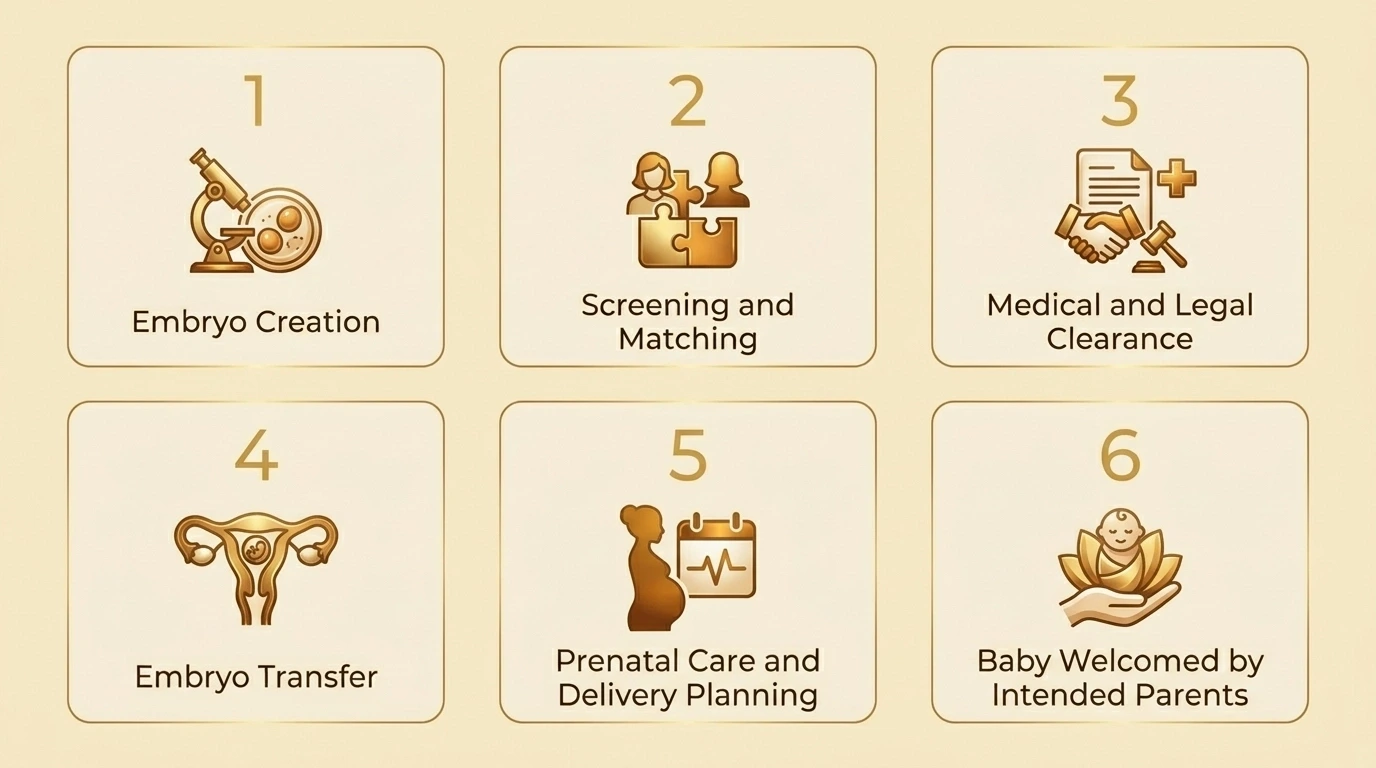
The journey generally follows a structured sequence. This helps protect the well-being of the Surrogate and the future child:
- Embryo Creation: Intended Parents work with an IVF clinic to create embryos using their own eggs and sperm or donor eggs and sperm. If you are still building your medical team, our guide on how to choose the best IVF clinic for surrogacy can help clarify what matters. For some Intended Parents, embryo creation may involve choosing an egg donor.
- Screening and Matching: A qualified Gestational Surrogate is recruited, carefully screened, and matched with Intended Parents. The process includes several review steps. Specifically, those steps evaluate readiness, medical history, support, and overall fit for a Surrogacy Journey. You can review the details in our Surrogate screening requirements overview.
- Medical and Legal Clearance: Required medical clearances are completed. Additionally, the Intended Parents and Surrogate each work with independent reproductive legal counsel. Together, they finalize a formal gestational surrogacy agreement. The agreement covers key rights, responsibilities, and expectations.
- Embryo Transfer: The fertility clinic performs the embryo transfer. However, a transfer does not guarantee pregnancy on the first attempt.
- Prenatal Care and Delivery Planning: If pregnancy is achieved, the Surrogate continues prenatal care with her obstetric providers. Meanwhile, delivery planning moves forward with the medical, legal, and agency teams as appropriate.
- The Homecoming: The child is welcomed by the Intended Parents. Consequently, hospital and parentage steps follow the applicable legal plan.
Topic 3: Who Are the Baby’s Legal Parents?
In gestational surrogacy, parentage is handled through a formal legal process. It is not left to assumption. Because laws and procedures vary by state, experienced reproductive legal counsel determines the right path. Specifically, that path establishes the Intended Parents’ parentage and documents each participant’s rights and responsibilities.
Experienced reproductive attorneys prepare the needed agreements, filings, and parentage steps. They do this based on the jurisdiction where the birth will occur. Depending on the state and legal pathway, these steps may support birth planning. Additionally, they may support parentage recognition and the documentation needed after delivery.
Golden Surrogacy helps coordinate the journey timeline with the parties and their attorneys. Therefore, legal planning can move forward in a way that supports birth preparation and hospital coordination. The specific timing and legal strategy are always guided by reproductive counsel. For more answers to common questions about parentage and legal protections, visit our Intended Parent FAQ.
Topic 4: How Do Intended Parents Find a Surrogate?
Intended Parents may consider either independent surrogacy or agency-supported surrogacy. This is one of the most important early decisions in a Surrogacy Journey.
Independent surrogacy requires the parents to manage recruiting, screening, risk assessment, and professional coordination on their own. Consequently, this path can bring significant burdens and risks. Parents must often act as their own case managers. For a deeper look at the differences, read our guide to surrogacy agency vs. independent surrogacy.
Working with an experienced agency like Golden Surrogacy provides a more supported and professionally coordinated path. We manage Surrogate recruitment, prescreening, matching, and journey coordination. Specifically, our goal is to identify a thoughtful, well-aligned match. That match is based on participant preferences, qualification standards, and clinical considerations. Matching timelines vary. They depend on candidate availability, Intended Parent preferences, embryo readiness, insurance considerations, geographic factors, and other case-specific details. Because matching is a priority for most families, you may also find our guide on how long it takes to match with a Surrogate helpful.
Topic 5: How Much Does a Surrogacy Journey Cost?
One of the most common questions from Intended Parents is how to financially prepare for the journey. Surrogacy is a significant investment. Therefore, clear financial planning is essential from the beginning.
For many Intended Parents using a non All-In program, a realistic planning range for gestational surrogacy is often approximately $150,000 to $225,000. However, higher-complexity journeys can exceed that range. This often happens when donor eggs, additional embryo transfers, specific insurance needs, or other pregnancy-related variables arise.
For a more detailed breakdown of the financial side of a Surrogacy Journey, review our Costs & Financing resource and current Intended Parent service costs.
Every journey is unique. Consequently, it is essential for Intended Parents to review current program pricing and cost guidance directly with their agency. Realistic preparation lets you focus on the emotional joy of the process instead of financial uncertainty. For more details on budgeting, see our guide on managing expectations as an Intended Parent.
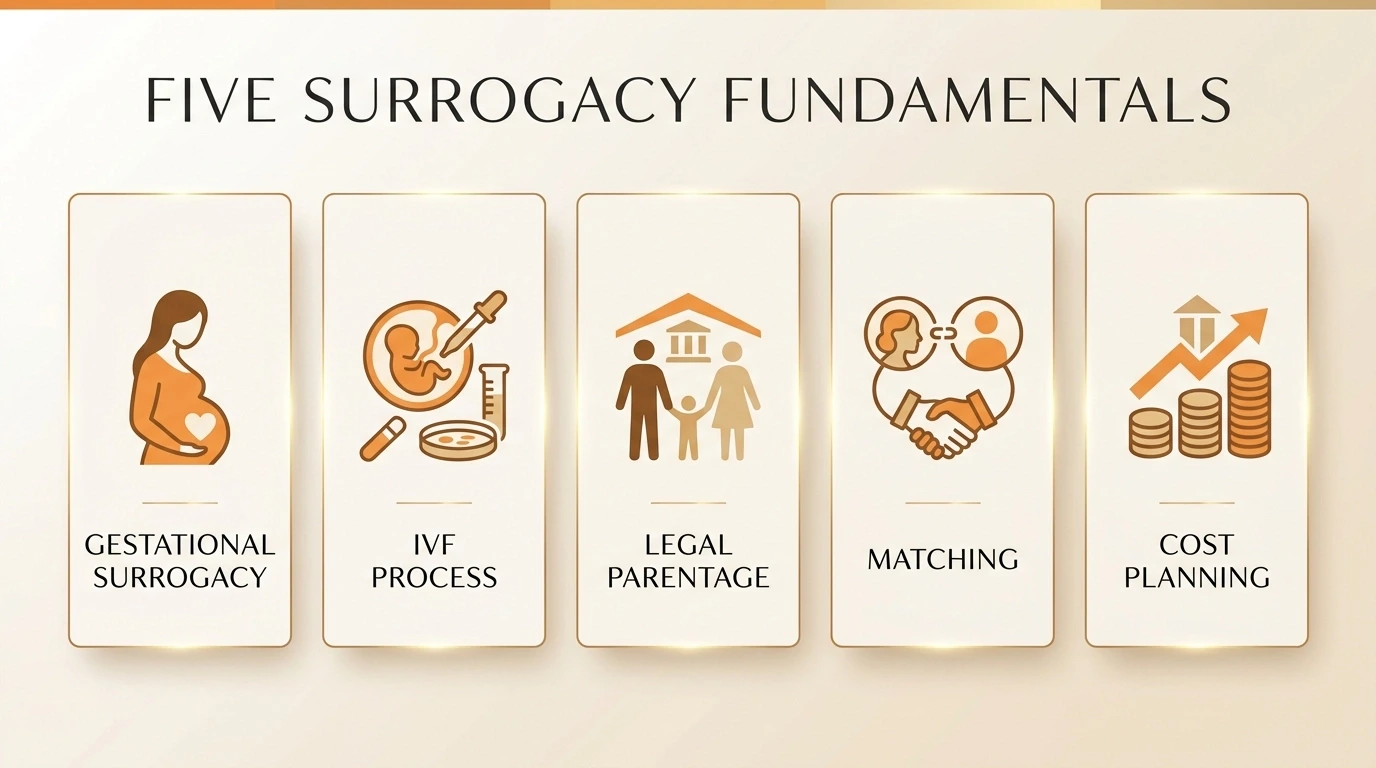
Recap: The Fundamentals of a Surrogacy Journey
To summarize the core basics of a Surrogacy Journey:
- Gestational surrogacy is the model Golden Surrogacy works with. The Surrogate is not genetically related to the baby.
- The journey involves a precise sequence of IVF, professional screening, legal work, and clinical coordination.
- Parentage is established through a state-specific legal process with specialized reproductive counsel.
- Agency support can reduce the coordination burden. It can also help protect the quality and safety of the process.
- Surrogacy costs vary. However, realistic financial preparation requires understanding the full scope of the journey early on.
Once these fundamentals are clear, Intended Parents and prospective Surrogates are in a stronger position to evaluate the next steps with confidence.
Taking the Next Step with Golden Surrogacy
If you are an Intended Parent beginning to explore gestational surrogacy, Golden can help you understand the process with clarity, realism, and compassionate guidance. Learn more about why Intended Parents choose Golden or begin your path to parenthood.
If you are considering becoming a Surrogate, you can review our Surrogate requirements, learn more about why Surrogates choose Golden, or apply to become a Surrogate.