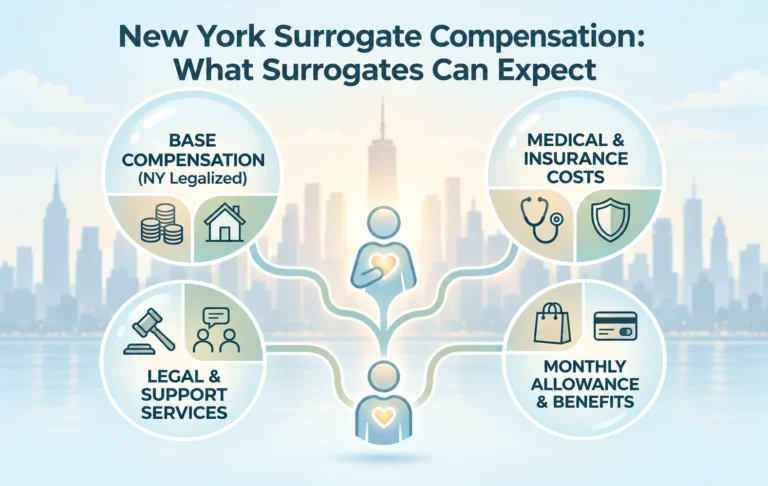



If you’re considering becoming a Surrogate in New York, understanding the legal landscape is an important first step! The good news is that New York surrogacy laws now provide some of the strongest protections for Surrogates anywhere in the country. Gestational surrogacy became legal in New York on February 15, 2021, and the law was specifically designed with your safety, autonomy, and well-being in mind.
This article will walk you through everything you need to know about surrogacy laws in New York. We’ll cover how the law protects you, what makes New York unique, and why working with a licensed agency matters so much. By the end, you’ll have a clear picture of what the legal process looks like from a Surrogate’s perspective!
Is Surrogacy Legal in New York?
Yes! Gestational surrogacy is fully legal in New York. This became official on February 15, 2021, when the Child-Parent Security Act (CPSA) took effect.
The CPSA established a comprehensive legal framework specifically for gestational surrogacy. Under this law, Surrogates carry a baby with no genetic connection to themselves. The embryo is created using the eggs and sperm of the Intended Parents or donors.
New York’s Child-Parent Security Act framework discussed here applies to gestational surrogacy, where the Surrogate does not provide the egg. Traditional surrogacy has different legal consequences and should not be treated as an equivalent route simply because an arrangement is unpaid. Golden facilitates gestational surrogacy. For more context, read our guide to gestational vs. traditional surrogacy.
What makes New York’s law special is its focus on Surrogate protection. The state created a Surrogates’ Bill of Rights that guarantees your autonomy, your health decisions, and your financial security throughout the journey!
Why New York Changed Its Surrogacy Laws
For decades, New York prohibited compensated surrogacy. The state had concerns about potential exploitation and wanted to protect women from unethical arrangements.
However, lawmakers recognized that an outright ban didn’t eliminate surrogacy. It simply pushed New York residents to seek surrogacy in other states without the same protections.
The CPSA was designed to change that. Rather than banning surrogacy, New York created one of the most protective legal frameworks in the country. The law focuses on safeguarding Surrogates’ health, autonomy, and rights at every stage of the process.
This approach ensures that women who choose to become Surrogates do so with full information, proper support, and strong legal protections!
How New York Surrogacy Agency Licensing Works
If you use a surrogacy matching program for a New York arrangement, that program must hold the required state license. New York law also recognizes arrangements without a matching program. Hiring an agency is not itself mandatory, and the eligibility, agreement, insurance, and legal protections still apply. See Family Court Act section 581-403.
The licensing requirement applies to businesses and people operating a regulated surrogacy program. It gives you a concrete credential to verify when comparing agencies.
New York regulates surrogacy programs so that agencies arranging or facilitating covered journeys meet defined operational requirements. Licensed agencies must demonstrate that they:
- Follow ethical practices in recruiting and supporting Surrogates
- Maintain proper financial safeguards
- Provide appropriate education and informed consent
- Meet ongoing compliance requirements
This means you can feel confident that a licensed agency has been thoroughly reviewed by the state. The agency must continue meeting these standards to maintain their license.
When you choose an agency, licensing provides an additional accountability measure. It does not replace your own attorney, clinical screening, insurance review, or the protections in your agreement.

Why New York’s Agency Licensing Is Unique Nationwide
Here’s a fact that might surprise you: New York is the only state in the United States with a government-issued surrogacy agency license.
New York’s program licensing offers a specific credential to verify. Other states may impose different business, professional, contract, escrow, or consumer-protection obligations even when they do not use the same licensing system.
New York took a different approach. The state recognized that protecting Surrogates requires regulating the agencies that work with them. This creates:
- Greater transparency in how agencies operate
- Increased accountability to state standards
- Stronger safety measures for Surrogates
- Clear consequences for agencies that don’t meet requirements
For women considering surrogacy, this makes New York one of the most protective states in the country. You’re not just trusting an agency’s word. You’re working with an organization that has been vetted and approved by the state government!
Golden Surrogacy’s New York Licensing Leadership
Golden Surrogacy was one of the first five surrogacy agencies to receive a state license in New York.
Earning this license required extensive compliance work, thorough audits, and detailed ethical review. The process demonstrated our long-term commitment to operating at the highest standards.
Founder Frank Golden leads our team with a simple philosophy: every Surrogate is treated like family. Our dedicated Care Team supports you throughout your journey, and our Agency Director is available via phone, text, and email whenever you need guidance.
Being among the first licensed agencies in New York reflects our commitment to transparency, ethics, and Surrogate well-being. It’s not about marketing. It’s about earning your trust through actions and accountability!
How New York Surrogacy Laws Protect Surrogates
New York’s surrogacy laws include numerous protections specifically designed for Surrogates. Understanding these protections can help you feel more confident about the process!
Key protections include:
- Enforceable contracts that clearly outline everyone’s rights and responsibilities
- Required independent legal representation so you have your own attorney
- Informed consent protections ensuring you understand every step
- Medical decision-making rights so you control your healthcare choices
- Compensation protections with funds held in escrow accounts
- Comprehensive health insurance paid for by the Intended Parents
Required comprehensive health coverage must take effect before medication or treatment to further embryo transfer. Coverage and qualifying out-of-pocket costs extend through pregnancy and 12 months after birth, stillbirth, miscarriage, or termination, as specified in section 581-402. The law also requires qualifying life insurance and protects access to counseling. Your lawyer and insurance professionals confirm the complete requirements.
You can learn more about financial aspects in our guide to New York surrogate compensation!
Surrogacy Contracts and Legal Representation in New York
New York requires a compliant written surrogacy agreement before medication or medical procedures to further embryo transfer begin. Eligibility evaluations take place earlier. The statute separately addresses escrow funding and the timing of required insurance.
One of the most important protections is that you must have your own independent attorney. This lawyer represents only you. They review the contract, explain your rights, and make sure your interests are protected.
The best part? Intended Parents pay for your legal fees. You receive quality legal representation at no cost to you.
Your contract will cover important topics like:
- Compensation and payment schedules
- Medical procedures and decision-making
- Communication expectations
- What happens in various scenarios
Having everything in writing before embryo transfer protects your autonomy and provides clarity for everyone involved. The legal process begins only after you’ve received medical clearance, ensuring you’re fully prepared before taking this step!
If you are comparing agency-supported surrogacy with an informal or independent arrangement, our guide to surrogacy agency vs. independent surrogacy explains why legal coordination, escrow protection, insurance review, and case management matter so much for Surrogates.

Parentage Orders and the Surrogate’s Legal Role
Understanding parentage is important for your peace of mind. In gestational surrogacy, the Intended Parents are the legal parents of the child. You, as the Surrogate, are not the legal parent.
This might sound simple, but it’s actually a significant protection for you!
Parentage orders establish the Intended Parents’ legal status. This means:
- You have no legal obligations to the child after birth
- The Intended Parents’ names go on the birth certificate
- There’s no confusion about parental rights or responsibilities
This legal clarity protects you emotionally and legally. You can focus on the beautiful gift you’re giving without worrying about future complications. During the second trimester, birthrights and hospital coordination are arranged to ensure a smooth delivery experience for everyone!
Common Legal Myths About Surrogacy in New York
There’s still a lot of misinformation about surrogacy out there. Let’s clear up some common myths!
Myth: “Surrogacy is risky or unregulated in New York.”
Fact: New York has some of the strongest surrogacy regulations in the country. The state licenses agencies and requires extensive Surrogate protections.
Myth: “Surrogates are not protected by law.”
Fact: The CPSA created a Surrogates’ Bill of Rights guaranteeing your autonomy, compensation protections, and healthcare rights.
Myth: “Agencies can operate without oversight.”
Fact: New York is the only state requiring government-issued agency licenses. Agencies must meet strict standards to operate legally.
Understanding the facts helps you make informed decisions. Education is empowering, and you deserve accurate information about the surrogacy process!
Why Working With an Experienced, Licensed Agency Matters
Choosing a licensed agency isn’t just about following the law. It’s about ensuring you have the support and protection you deserve throughout your journey.
An experienced, licensed agency provides:
- Compliance with state requirements so your journey stays on track
- Ethical standards that prioritize your well-being
- Advocacy for your understanding and comfort
- Transparency about every step of the process
- Education before you make any commitments
At Golden Surrogacy, we believe you should feel fully informed and confident before moving forward. Our team guides every Surrogate through the New York surrogacy timeline with care and clear communication!
Frequently Asked Questions About New York Surrogacy Laws
Is surrogacy legal in New York?
Yes! Gestational surrogacy has been legal in New York since February 15, 2021, under the Child-Parent Security Act.
Do Surrogates have to use a licensed agency?
You may arrange a New York gestational surrogacy journey without a matching program. If you use an agency or other regulated surrogacy program, it must hold the required New York license. Verify the program’s listing and retain your own independent attorney.
Are Surrogates protected by law?
Absolutely! New York created a Surrogates’ Bill of Rights that protects your autonomy, compensation, healthcare decisions, and more.
Who pays for legal fees?
Intended Parents pay for your independent legal representation. You receive your own attorney at no cost to you.
Can a Surrogate change her mind?
Surrogacy contracts are legally enforceable in New York. However, you retain rights over your own medical decisions throughout the pregnancy. This is why informed consent and education before signing are so important!
Making an Informed Decision About Surrogacy in New York
New York offers one of the most protective legal environments for Surrogates in the entire country. Understanding these protections helps you feel confident about exploring this path.
Remember these key points:
- Gestational surrogacy is legal and well-regulated in New York
- If you use a surrogacy program, verify its New York license
- You’ll have your own attorney and enforceable contract protections
- Your compensation is protected through escrow accounts
- Your medical decisions remain yours throughout the journey
Taking time to learn about New York surrogate requirements is an important step. There’s no rush. The right decision is an informed decision!
If you’re curious about what comes next, our team is here to answer your questions. When you feel ready, we’d love to help you explore whether becoming a Surrogate in New York might be right for you.
This information is for educational purposes and laws can vary based on individual circumstances. For personalized legal guidance, consult with a qualified attorney.