



New York Surrogate Compensation: What Surrogates Can Expect
December 11, 2025 by Frank Golden
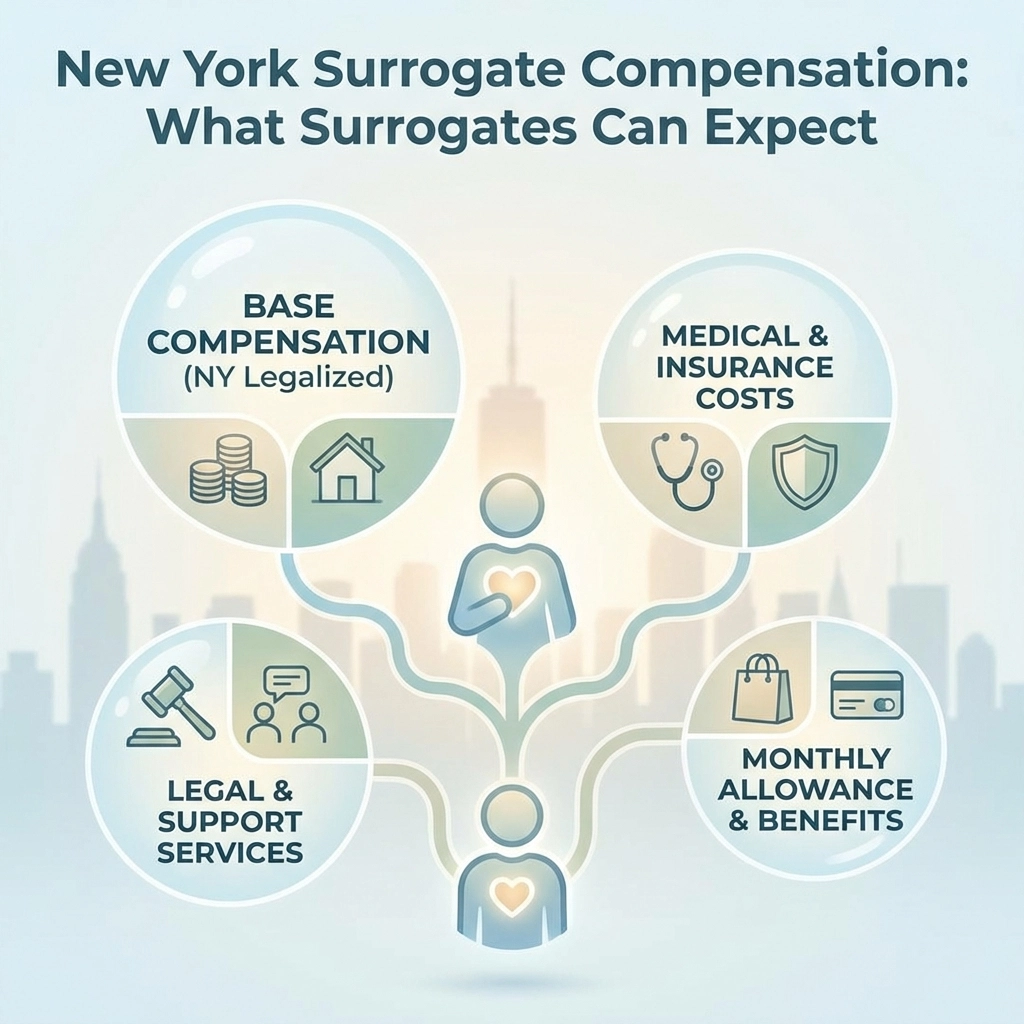
One of the most common questions women ask when considering surrogacy is about pay. That makes sense! Understanding New York surrogate compensation is an important part of deciding whether this journey is right for you.
The good news? New York has some of the strongest surrogate protections in the country. This includes clear guidelines around how compensation works and how your payments are protected.
In this article, we’ll walk through everything you need to know about surrogate pay in New York. We’ll cover base compensation, additional benefits, how payments are structured, and why transparency matters so much. Our goal is to give you realistic expectations so you can make an informed decision!
Table of Contents
- How Surrogate Compensation Works in New York
- Average New York Surrogate Compensation Ranges
- What Is Included Beyond Base Compensation
- Why “Up To” Compensation Numbers Can Be Misleading
- How Payments Are Protected Through Escrow
- How New York Law Supports Surrogate Compensation
- How Golden Surrogacy Structures Compensation Ethically
- Frequently Asked Questions About New York Surrogate Compensation
- Making an Informed Decision About Compensation
How Surrogate Compensation Works in New York
Surrogate compensation isn’t a single lump-sum payment. Instead, it’s structured into different components that support you throughout your journey.
The two main parts are base compensation and reimbursements.
Base compensation is the amount you receive for carrying the pregnancy. This is typically paid in monthly installments throughout the pregnancy and postpartum period.
Reimbursements cover your actual expenses. Things like travel costs, maternity clothing, and childcare during appointments fall into this category.
This structure exists for good reasons! It ensures you’re supported at every stage rather than waiting until delivery for payment. It also means you’re never out of pocket for surrogacy-related expenses.
Clear contracts and escrow accounts protect these payments. Before any medical procedures begin, everything is documented and funds are secured. This gives you peace of mind from day one!
Understanding the full surrogacy process helps you see how compensation fits into each phase of your journey.

Average New York Surrogate Compensation Ranges
So how much do Surrogates actually earn in New York?
Compensation varies based on individual circumstances. However, here are typical ranges to give you a realistic picture:
First-time Surrogates generally receive base compensation between $50,000 and $60,000.
Experienced Surrogates who have completed previous journeys often earn $55,000 to $65,000 or more.
Several factors influence where you fall within these ranges:
- Prior surrogacy experience: Women who have successfully completed a surrogacy journey before typically receive higher compensation
- Medical history: A straightforward medical history with previous healthy pregnancies can positively impact compensation
- Travel requirements: If you live farther from the fertility clinic, additional travel considerations may be factored in
- Insurance considerations: Your existing health insurance coverage can affect the overall package structure
New York’s higher cost of living is also reflected in compensation packages. Surrogates in New York often receive competitive pay compared to other states.
It’s important to remember that these are general ranges. Your specific compensation depends on your unique circumstances and the terms outlined in your contract. Learning about New York surrogate requirements can help you understand what qualifies you for this journey!
What Is Included Beyond Base Compensation
Base pay is just one piece of your total compensation package. Surrogates also receive reimbursements and allowances that cover the real costs of pregnancy.
Here’s what’s typically included:
Monthly Allowance: $250 to $350 per month for miscellaneous pregnancy-related expenses. This covers small costs that add up over nine months.
Maternity Clothing Allowance: $500 to $1,000 to help you purchase comfortable clothing as your body changes.
Travel and Lodging Reimbursements: All costs for medical appointments are covered. This includes gas, parking, tolls, and sometimes overnight stays if needed.
Lost Wages: If you miss work for medical appointments or required bedrest, your lost income is reimbursed.
Childcare Reimbursement: When you need childcare to attend appointments, those costs are covered too.
Medical Procedure Fees: Additional payments for specific procedures like embryo transfers or C-sections.
These reimbursements exist because surrogacy shouldn’t cost you money! Every reasonable expense related to your journey is accounted for in your agreement.
Why “Up To” Compensation Numbers Can Be Misleading
You’ve probably seen advertisements claiming Surrogates can earn “up to $100,000” or similar eye-catching numbers.
Here’s the truth: those figures often represent the absolute maximum under perfect circumstances. They may include every possible bonus, reimbursement, and rare-circumstance fee combined.
Most Surrogates won’t hit those top numbers, because they have a smooth pregnancy. And that’s completely normal!
Ethical agencies avoid vague figures for good reason. Inflated numbers create unrealistic expectations. When reality doesn’t match the marketing, it leads to disappointment and frustration. And remember, reimbursements are just that, a reimbursement, and should not be considered compensation.
What matters most is understanding your actual compensation schedule before you commit.
A detailed compensation schedule breaks down exactly what you’ll receive and when. It should clearly separate base compensation from reimbursements. There shouldn’t be any surprises.
Before signing anything, review the full compensation breakdown. Ask questions about anything that seems unclear. A trustworthy agency welcomes these conversations!
According to the American Society for Reproductive Medicine (ASRM), transparency in compensation discussions is a cornerstone of ethical surrogacy practice.

How Payments Are Protected Through Escrow
Escrow is one of the most important protections for Surrogates. But what exactly is it?
Escrow is a secure, third-party bank account where all compensation funds are deposited before your journey begins.
Here’s how it works:
- Intended Parents deposit the full compensation amount into the escrow account
- A neutral escrow company manages these funds
- Payments are released to you according to your contract schedule
- Milestone-based payments ensure you’re paid on time, every time
This system protects you in several important ways. The money is already set aside before medical procedures start. You never have to chase payments or worry about whether funds are available.
Milestone-based payments typically follow the pregnancy timeline. You might receive payments at confirmation of pregnancy, at the end of each trimester, and after delivery.
New York law supports these protections. Escrow isn’t optional. It’s a required safeguard that ethical agencies build into every journey.
Understanding the New York surrogacy timeline helps you see when these payment milestones typically occur!
How New York Law Supports Surrogate Compensation
New York has some of the strongest surrogate protections in the entire country!
Under the Child-Parent Security Act, compensation agreements are legally enforceable. This means your contract isn’t just a promise. It’s a binding legal document.
Several legal protections support your compensation rights:
Independent Legal Representation: New York law requires that Surrogates have their own attorney. This lawyer works exclusively for you, reviewing your contract and ensuring your interests are protected. The Intended Parents cover these legal fees.
Transparency Requirements: Compensation terms must be clearly documented. No hidden clauses or vague language.
The Surrogate’s Bill of Rights: New York’s law includes specific protections ensuring Surrogates maintain autonomy and receive fair treatment throughout their journey. This includes rights related to compensation and how you’re treated financially.
Here’s something unique about New York: it’s the only state in the U.S. with government-issued surrogacy agency licenses.
This means agencies operating in New York must meet strict standards set by the state. For Surrogates, this adds an extra layer of protection and accountability!
New York residents who want to become Surrogates must work with a state-licensed surrogacy agency. This requirement exists specifically to protect women like you from unethical practices.
For more details on your legal protections, read our guide to New York surrogacy laws.

How Golden Surrogacy Structures Compensation Ethically
At Golden Surrogacy, transparency isn’t just a buzzword. It’s how we operate every single day.
Golden Surrogacy was among the first five surrogacy agencies to receive a state license in New York. This required extensive compliance reviews, audits, and demonstration of ethical practices.
Founder Frank Golden leads our team with a simple philosophy: every Surrogate is treated like family. Our dedicated Care Team supports you throughout your entire journey. And our Agency Director is available via phone, text, and email whenever you need guidance.
Here’s what ethical compensation looks like with us:
Clear Compensation Schedules: Before you commit to anything, you’ll receive a detailed breakdown of your entire compensation package. No surprises, no fine print tricks.
Written Documentation: Everything is documented clearly in your contract. Your independent attorney reviews every detail with you.
Escrow Protection: All funds are secured in escrow before medical procedures begin. Your payments are guaranteed.
Education Before Commitment: We believe you should fully understand compensation before making any decisions. That’s why we take time to answer every question you have.
We don’t use inflated “up to” numbers in our marketing. We give you honest, realistic expectations because that’s what you deserve!
Frequently Asked Questions About New York Surrogate Compensation
How much do Surrogates get paid in New York?
Base compensation for first-time Surrogates typically ranges from $50,000 to $60,000. Experienced Surrogates often earn $55,000 to $65,000 or more. Total compensation, including reimbursements and allowances, varies based on individual circumstances and contractual terms.
When do payments begin?
Payments typically begin after legal contracts are finalized and escrow is funded. Monthly base compensation usually starts around the time of embryo transfer and continues through pregnancy and the postpartum period.
Do Surrogates pay expenses upfront?
No! Ethical surrogacy arrangements ensure you’re never out of pocket for journey-related expenses. Reimbursements are built into your compensation package, and many expenses are paid directly rather than requiring you to pay first.
Is compensation taxable?
Tax situations vary based on individual circumstances. The IRS considers various factors when determining tax obligations. We recommend consulting with a tax professional familiar with surrogacy compensation to understand your specific situation.
What happens if the journey is delayed?
Delays can happen for various reasons. Your contract outlines how delays are handled, including any continued allowances or additional compensation. This is one of many details your independent attorney will review with you.
Making an Informed Decision About Compensation
Understanding New York surrogate compensation goes beyond knowing the numbers. It’s about feeling confident that you’ll be treated fairly and transparently throughout your journey.
Here’s what we hope you take away from this article:
Clarity matters. You deserve to know exactly what you’ll earn and when you’ll receive it. Don’t settle for vague promises.
Protections exist. New York law, escrow accounts, and agency licensing all work together to safeguard your compensation.
Questions are welcome. Any agency worth working with will happily answer your compensation questions in detail.
If you’re considering becoming a Surrogate in New York, take your time. Learn as much as you can. When you feel informed and ready, the right path forward will be clear.
We’re here whenever you’re ready to learn more. No pressure, no rush. Just honest information to help you decide what’s right for you and your family!